In the context of optimizing the performance of water treatment plants, the right diffuser can make all the difference. Whether you’re managing a municipal wastewater facility or an industrial water purification system, selecting the correct diffuser is crucial to achieving high efficiency, low energy consumption, and superior water quality. This guide will help you understand why diffusers are essential and how to choose the right one for your establishment.
Why Diffusers are Important in Water Purification
Diffusers are a key component of any water treatment system, responsible for aerating the water by distributing air or oxygen evenly throughout the treatment tank. This process promotes the growth of beneficial bacteria that break down organic matter, removes harmful substances, and ensures optimal purification. The efficiency of your water treatment process relies on the performance of your diffuser, making it an important investment for plant operators.
Benefits of Using High-Quality Diffusers
- Advanced Treatment Efficiency: Diffusers enhance oxygen transfer, speeding up the decomposition of pollutants and augmenting overall treatment efficiency.
- Energy Savings: Modern diffusers are designed to reduce energy consumption by optimizing air flow and reducing the workload on compressors.
- Improved Water Quality: By providing regular aeration, diffusers help maintain ideal conditions for biological treatment, leading to better water clarity and quality.
- Reduced Maintenance Costs: High-quality diffusers are built to last and require less frequent replacement, minimizing interruption and maintenance costs.
How to Choose the Right Diffuser for Your Plant
- Understand Your Treatment Process Needs:
- Evaluate the specific requirements of your water treatment process. For instance, systems that deal with high loads of organic waste may need diffusers with higher oxygen transfer capabilities.
- Consider the type of aeration your plant uses—whether it’s coarse bubble aeration, fine bubble aeration, or another method—since different diffuser types attend to different aeration needs.
- Diffusers Types:
- Fine Bubble Diffusers: These are ideal for applications requiring high oxygen transfer efficiency. They produce small bubbles that increase the contact area between air and water, making them perfect for biological treatment processes.
- Coarse Bubble Diffusers: Best for mixing and agitation purposes, coarse bubble diffusers provide less oxygen transfer efficiency but excel at preventing sedimentation and maintaining sludge suspension.
- Membrane Diffusers: Featuring flexible membranes, these diffusers offer great versatility and are highly effective at avoiding obstructions, which is crucial for long-term operation in various water treatment settings.
- Material and Durability:
- Choose diffusers made from durable materials like elastometric material, silicone, ceramic, which offer resistance to chemicals and impurities. This ensures longevity and reduces the need for frequent replacements.
- Ease of Installation and Maintenance:
- Opt for diffusers that are easy to install and maintain. Some diffusers are designed for quick disassembly, making cleaning and inspection very simple, which is particularly useful in high-demand environments.
Our Top Diffuser Recommendations
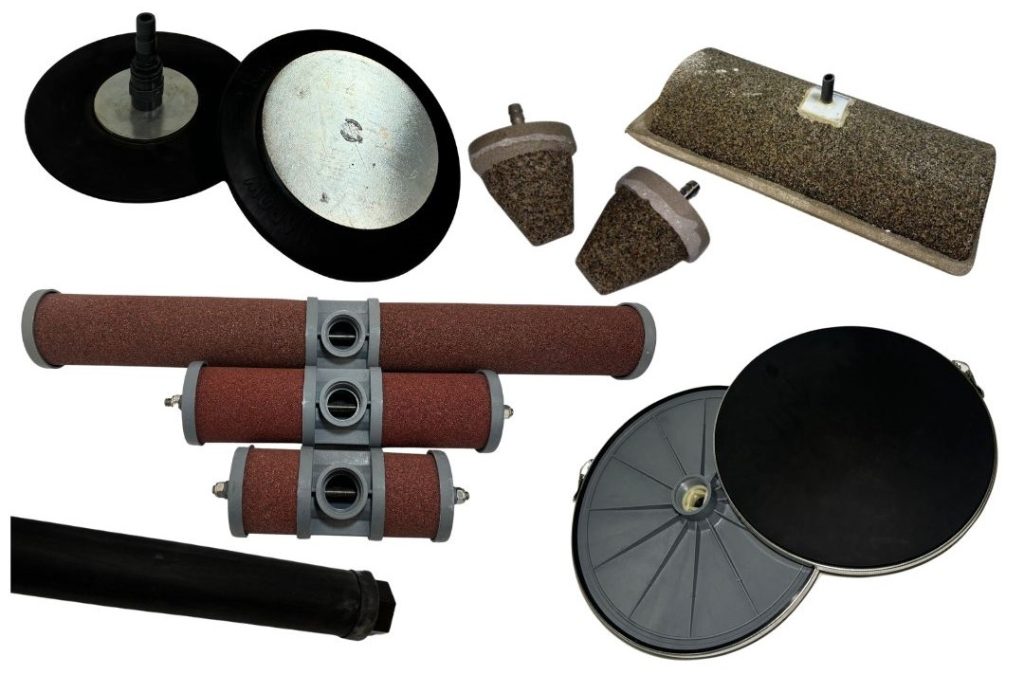
At Water Purification Center, we provide a wide range of high-quality diffusers designed to enhance the efficiency of your water treatment plant. Here are some of the top types of diffusers we offer:
- Fiberglass Diffusers
- Best For: Industrial and municipal water treatment plants that require robust and corrosion-resistant diffusers.
- Features: Made from durable fiberglass materials, these diffusers offer exceptional resistance to harsh chemicals, UV rays, and corrosion. Their lightweight design allows for easy installation and handling, while their robust structure ensures long-term performance with minimal maintenance.
- Why Choose This: Ideal for environments where durability and abrasion resistance are crucial, fiberglass diffusers provide reliable aeration with reduced maintenance needs, making them a cost-effective solution over time.
- Counterweight Diffusers
- Best For: Applications needing precise positioning and stability in aeration tanks.
- Features: Designed with integrated counterweights, these diffusers ensure stable and accurate placement, even in high-flow conditions. They are particularly effective in maintaining consistent aeration without being displaced by currents or air flow variations.
- Why Choose This: Perfect for treatment plants requiring steady, reliable diffuser positioning, counterweight diffusers enhance system efficiency by staying exactly where they are needed, minimizing the risk of uneven aeration.
- Membrane Diffusers
- Best For: Versatile water treatment applications that require high oxygen transfer efficiency and clog-resistant performance.
- Features: Utilizing flexible membrane technology, these diffusers demonstrate strong resistance to fouling, minimizing maintenance. They produce fine bubbles that significantly enhance oxygen transfer, making them suitable for biological treatment processes.
- Why Choose This: Membrane diffusers offer a balance of efficiency, ease of maintenance, and long-term reliability, making them an excellent choice for various treatment settings.
- Ceramic Diffusers
- Best For: High-performance aeration in both industrial and public wastewater treatment systems.
- Features: Ceramic diffusers are known for their high durability and fine bubble production, which maximize oxygen transfer rates. Their robust construction ensures long life and consistent performance, even in the most demanding conditions.
- Why Choose This: Ceramic diffusers are ideal for facilities seeking high-efficiency aeration with the added benefit of superior durability, especially in environments with high chemical exposure.
- Disc Diffusers
- Best For: Systems requiring adaptable aeration with efficient oxygen transfer and low-pressure loss.
- Features: Disc diffusers come in various materials and designs, offering flexibility to match specific process requirements. They are easy to install, clean, and maintain, making them a popular choice for many water treatment applications.
- Why Choose This: With their versatile design and high-efficiency performance, disc diffusers provide an excellent balance between cost-effectiveness and aeration quality.
Don’t compromise on the efficiency and quality of your water treatment process. Explore our range of diffusers today and discover how the right diffuser can transform your plant’s performance. Visit Water Purification Center to view our full selection designed to meet the specific needs of your depuration plant, or contact our experts for personalized advice. Optimize your water treatment system with the best diffusers!